At 2020 Advanced Eye Care, we specialize in fitting prescription contact lenses for all-day comfort and clarity. During your comprehensive contact lens exam, we’ll evaluate your eye health, shape, and size to determine the best fit for your vision and your lifestyle. Whether it’s your first time exploring contacts or an upgrade to your existing prescription, our team is here to help you understand your options so you can leave seeing and feeling confident.

A contact lens exam is different from an eye exam for glasses. While they start out similarly to evaluate your overall eye health, you can expect a contact lens exam to run longer. The extended exam accommodates additional testing and education. This ensures you are a good candidate for contacts and that you are prescribed a type of contact lens that works for you.
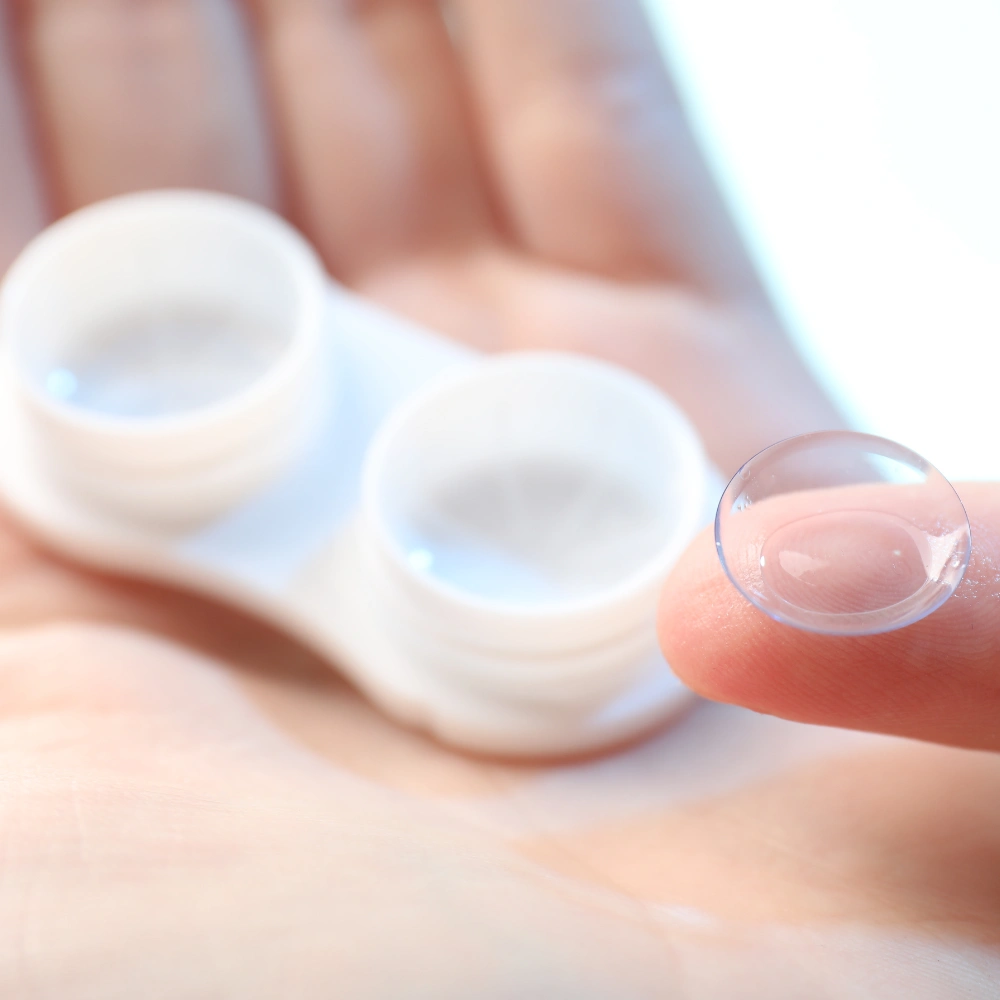
A contact lens exam starts by evaluating your overall eye health. We’ll check for any underlying conditions, like dry eye, astigmatism, and other common eye issues. Then, we’ll talk about your lifestyle. Wearing contacts requires additional care, including inserting your contacts with clean hands, removing them to sleep, and swapping them out for a fresh pair as recommended.
Once we’ve determined that contact lenses are right for you, we’ll conduct a series of tests to get your prescription. We use advanced technology to measure the size and shape of your eyes. This step is of the utmost importance as it tells us which contact lens will fit each of your eyes for optimal clarity and comfort. Ill-fitting lenses can lead to discomfort and poor vision.
From there, our team will teach you how to insert your new lenses, check their fit on your eyes, and provide information on how to care for them. At this point, you’ll have the option to test the lenses out for a few days as a trial and order them later, or fill your prescription right away.
There are dozens of options when it comes to contact lenses. Determining the best fit for you involves an evaluation of several factors. These include the wear schedule, the material of the lenses, the type of vision correction needed, and more. During your contact lens exam, our team will make recommendations and allow you to test different lenses to help you see great and feel comfortable with your selection.
Unlike glasses that are easy to wear and don’t require more than a quick cleaning, contacts are made with a “wear schedule” in mind. A “wear schedule” is how often you replace your contact lenses with new ones. You can have daily contact lenses that you only wear for one day before opening a new pair, bi-weekly that you change every other week, or monthly that you wear for a full month before swapping out. When choosing which contacts are right for you, our doctor will have you consider your personal habits to select the best option.
Astigmatism is a very common eye condition caused by an irregular curve of the cornea or lens. Instead of seeing sharp points, eyes with astigmatism receive light differently, leading to blurry or distorted vision. Toric lenses are specially designed contacts that refract light in a way that corrects astigmatism when worn.
Multifocal contact lenses have multiple prescription zones, improving vision for farsightedness and nearsightedness without having to change prescriptions. For example, if you struggle to read road signs, there will be a prescription zone to help you see at a distance. However, when you look down to read a book or your phone, there will be an additional prescription zone to ensure clarity.
While most people are familiar with soft prescription contact lenses, some patients require a hard contact lens. This durable material is most common for patients with strong prescriptions or conditions like keratoconus and dry eye, allowing for sharper vision, consistent correction, and a lower risk of infection.
Finding the right contact lenses isn’t a one-size-fits-all process. The best lenses for you depend on your vision needs, eye health, comfort preferences, and lifestyle. During your contact lens exam at 2020 Advanced Eye Care, our team will walk you through your options and help you understand the benefits of each type of lens.
We’ll consider factors like:
Our goal is to make sure you leave with lenses that feel natural, perform well, and support healthy eyes.
Yes. A standard eye exam checks your vision and overall eye health, but a contact lens exam includes extra measurements, testing, and training to ensure your lenses fit safely and comfortably.
Most exams take a little longer than a glasses-only exam. This allows time for fitting, lens training, and evaluating how your eyes respond to the lenses.
Yes. After we complete your exam and confirm you are a good candidate, you can receive a prescription even if you are not ready to purchase lenses that day.
That is completely okay. Our team will teach you how to insert, remove, and care for your lenses. Most first-time wearers feel confident after just a few tries.
Yes. With proper hygiene and instruction, many children and teens do very well with contact lenses, especially daily disposables, since they are the easiest to maintain. If your child or teen wants to try contact lenses, we recommend being diligent about the schedule of the lenses with them to ensure that they are following proper contact lens protocol.
Many patients with dry eye can still wear contact lenses. Newer lens materials are designed to retain moisture and improve comfort. We will evaluate your symptoms and recommend the best option.
Always follow the replacement schedule prescribed for you, whether daily, bi-weekly, or monthly. Wearing lenses longer than recommended increases the risk of irritation or infection.
Always follow the replacement schedule prescribed for you, whether daily, bi-weekly, or monthly. Wearing lenses longer than recommended increases the risk of irritation or infection.
Articles, guides and tools, to learn more about the mortgage and finance market.